VISITA EL PORTAL DE EDUCACIÓN DE LA JUNTA DE CASTILL A Y LÉON
Mostrando entradas con la etiqueta Grammar. Mostrar todas las entradas
domingo, 6 de noviembre de 2022
martes, 21 de enero de 2020
-ing forms
DANCE - DANCING I´m dancing
PLAY - PLAYING You´re playing tennis.
MAKE - MAKING He´s making a sandwich.
EAT - EATING She´s eating a hot dog.
DRINK - DRINKING The dog is drinking fresh water.
PAINT - PAINTING We´re painting wild animals.
WATCH - WATCHING You´re watching TV
READ - READING They´re reading a magazine.
PLAY - PLAYING You´re playing tennis.
MAKE - MAKING He´s making a sandwich.
EAT - EATING She´s eating a hot dog.
DRINK - DRINKING The dog is drinking fresh water.
PAINT - PAINTING We´re painting wild animals.
WATCH - WATCHING You´re watching TV
READ - READING They´re reading a magazine.
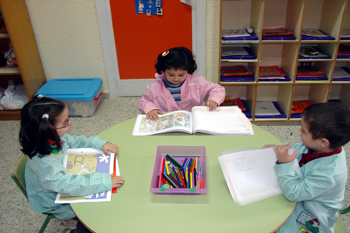
What are the children doing?
They are reading books.
What is he doing?
He is playing the drums.
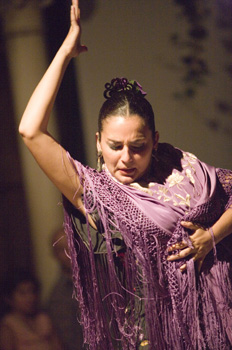
What is she doing?
She is dancing flamenco.
viernes, 18 de octubre de 2019
SOME AND ANY
SOME:
We've got some milk in the fridge.
There are some biscuits in the cupboard.
ANY:
We haven't got any sugar.
Is there any oil?
INTERACTIVE WORKSHEET
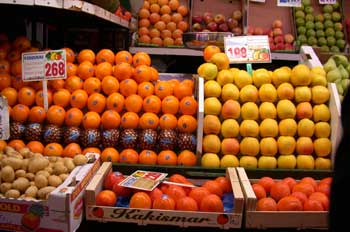
| There are some oranges. |
There are some biscuits in the cupboard.
ANY:
We haven't got any sugar.
Is there any oil?
INTERACTIVE WORKSHEET
martes, 8 de octubre de 2019
Simple Present
Simple Present is also called Present Simple.
The simple present tense is used:
- To express habits, general truths, repeated actions or unchanging situations, emotions and wishes.
- To give instructions or directions.
- To express fixed arrangements, present or future.
- To express future time, after some words: after, when, before, as soon as, until.
AFFIRMATIVE:
I play football once a week Yo juego al fútbol una vez a la semana.
He lives in London Él vive en Londres.
Three plus one makes four Tres y una son cuatro.
NEGATIVE:
I don´t like peas No me gustan los guisantes.
She doesn´t wear a uniform Ella no usa uniforme.
They don´t need a calculator Ellos no necesitan una calculadora
INTERROGATIVE:
Do you get up at half past eight? ¿Tú te levantas a las ocho y media?
Does she walk the dog? ¿Ella pasea al perro?
Do they watch funny videos? ¿Ellos ven vídeos divertidos?
Routines
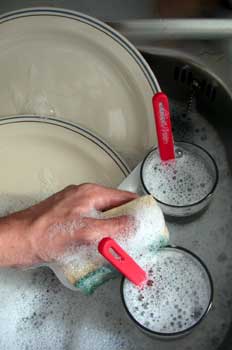
| I do the dishes |
I get up at a quarter to eight (07:45).
I have breakfast at eight o´clock (08:00).
I go to school at ten to nine (08:50).
I have English at eleven o´clock (11:00).
I have lunch at a quarter past two (14:15).
I do my homework from half past four to half past five (16:30-17:30).
I have dinner at twenty past eight (08:20).
I go to bed at half past ten (22:30).
viernes, 20 de septiembre de 2019
Must and mustn´t
miércoles, 10 de abril de 2019
lunes, 18 de febrero de 2019
lunes, 3 de diciembre de 2018
"Going to" future
Form
We use be + going to + the base form of the verb:
I´m going to recycle cans.
He´s going to walk to school.
| I´m going to plant some flowers. |
Uses
Intentions: She is going to be a teacher when she grows up.
Predictions: Watch out! You´re going to break that glass.
Commands: You´re going to tidy up your room.
lunes, 11 de junio de 2018
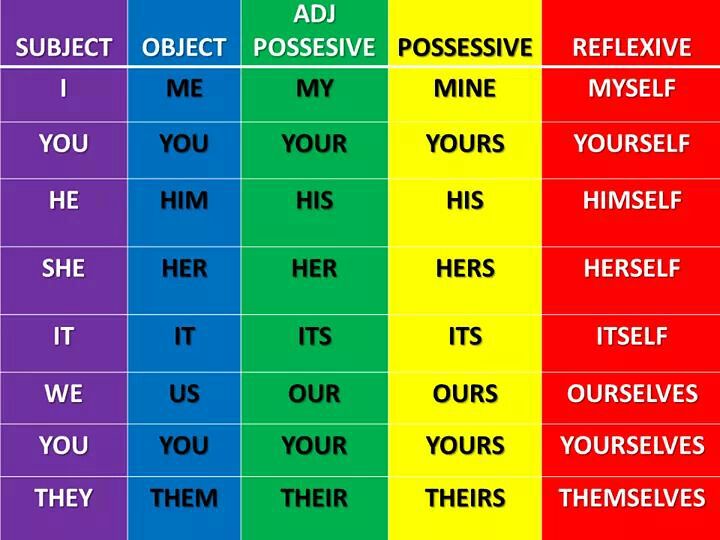
Pronouns and adjectives
Personal pronouns: I am a good student. You are my best friend.(subject)
Look at me! Give her a cup of tea!(object)
Possessive Adjectives: My granny is 75 years old. His mum is a teacher.
Possessive Pronouns: This book is mine. That pen is yours.
Reflexive Pronouns: I did it myself.
miércoles, 7 de febrero de 2018
Irregular verbs
Past Simple - Irregular verbs
NEGATIVE: I didn´t buy a new jumper.
INTERROGATIVE: Did you eat fish?
Yes, I did. No, I didn´t.
Spanish English Past Example Hacer Make Made I made a mistake. Comprar Buy Bought I bought a new shirt. Ir Go Went He went to the cinema. Ver See Saw She saw a new film. Venir Come Came They came to school by bus. Comer Eat Ate We ate spaghetti.
INTERROGATIVE: Did you eat fish?
Yes, I did. No, I didn´t.
martes, 6 de febrero de 2018
Regular verbs
Past Simple - Regular verbs
NEGATIVE: I didn´t work in a big restaurant.
INTERROGATIVE: Did you live in New York?
Yes, I did. No, I didn´t.
Spanish English Past Example Trabajar Work Worked I worked in a big restaurant. Vivir Live Lived I lived in New York. Inventar Invent Invented He invented a new robot. Escuchar Listen Listened She listened to the radio. Pintar Paint Painted They painted a new picture. Gustar Like Liked We liked the show.
INTERROGATIVE: Did you live in New York?
Yes, I did. No, I didn´t.
martes, 16 de enero de 2018
Present Simple vs Present Continuous
JOBS AND HOBBIES:
Present Simple
Carl is a cook. He works in a restaurant. He wears special clothes. He sometimes works on Saturdays and Sundays.
Present Continuous
Today Carl is not working. He is climbing a mountain with some friends.
Present Simple
Carl is a cook. He works in a restaurant. He wears special clothes. He sometimes works on Saturdays and Sundays.
Present Continuous
Today Carl is not working. He is climbing a mountain with some friends.
lunes, 15 de enero de 2018
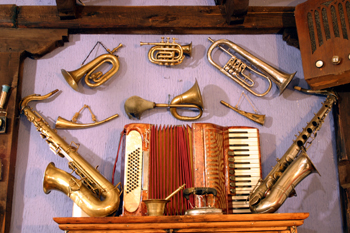
Music
Yes, I can. I can play the trumpet and the saxophone.
-------------
Can you play the piano?
No, I can´t.
Can: significa "poder" o "saber" hablando de habilidades.
Ej: I can ski ----Yo sé esquiar.
Can you ski? Yes, I can. No, I can´t.
I can´t play the drums.
Es igual para todas las personas: I can..You can...He can...She can...
sábado, 13 de enero de 2018
Superlatives
1.- Russia is the biggest country in the world. (El más grande) 17,075,200 km2
2.-Canada: 9,984,670 km2
- 3.-United States: 9,631,418 km2
- 4.-China: 9,596,960 km2
- .....................................................
- The smallest countries in the world are...
1 Vatican City 0.44 km sq 2 Monaco 2.02 km sq 3 Nauru 21 km sq 4 Tuvalu 26 km sq 5 San Marino 61 km sq
domingo, 7 de enero de 2018
Comparatives and Superlatives
| Spanish | English | Comparative | Superlative |
| Frío | Cold | Colder | The coldest |
| Calor | Hot | Hotter | The hottest |
| Grande | Big | Bigger | The biggest |
| Pequeño | Small | Smaller | The smallest |
| Húmedo | Wet | Wetter | The wettest |
| Seco | Dry | Drier | The driest |
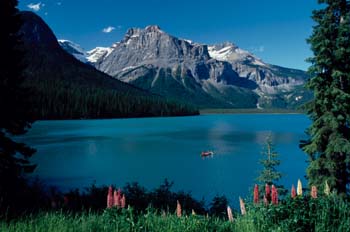
Canada is bigger than Spain. Spain is smaller than Canada.
Canada is wetter than Spain. Spain is drier than Canada.
martes, 26 de septiembre de 2017
martes, 28 de febrero de 2017
Singular and plural
➤La mayoría de los nombres forman el plural añadiendo -s al final: book-books, chair-chairs.
➤Los nombres terminados en s, x, z, ch, sh forman el plural añadiendo -es al final:
- bus-buses
- box-boxes
- dish-dishes
- watch-watches
➤Los nombres terminados en consonante + y forman el plural sustituyendo la y por -ies.
- lady-ladies
➤Los nombres terminados en consonante + o forman el plural añadiendo -es.
- potato-potatoes
➤ Algunas palabras que acaban en -f o en -fe cambian en plural por -ves.
- wife- wives
- shelf-shelves
➤Plurales irregulares:
man- men woman-women child-children tooth-teeth foot-feet
mouse-mice fish-fish sheep-sheep cactus-cacti
Suscribirse a:
Entradas (Atom)